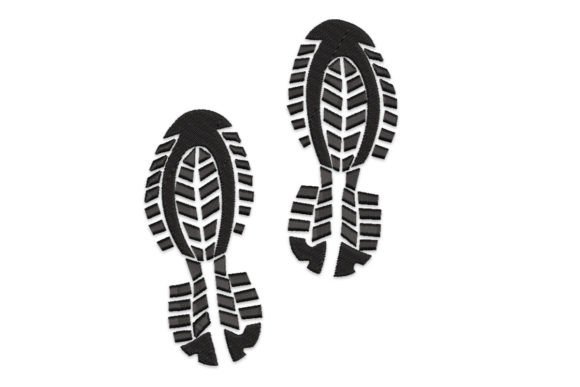
Footprint of Shoe Sole Embroidery Design
A Clean, Playful Statement for Boutique Apparel
As an embroidery designer who’s developed collections for small clothing brands and Etsy sellers for over a decade, I approach every Creative Fabrica embroidery file with two questions: “Does it hold up on apparel?” and “Does it elevate the brand—not just fill space?” The Footprint of Shoe Sole design immediately stood out—not as a flashy trend piece, but as a quietly confident motif. Visually, it reads as playful yet grounded: minimalist in outline, subtly dimensional in stitch layering, and refreshingly uncluttered. It’s not cutesy or cartoonish; it’s clever, slightly irreverent, and feels intentional—like something you’d choose for a boutique brand that values wit over whimsy.
Sweatshirt & Hoodie Performance: Chest, Sleeve, and Back Placement
For sweatshirt embroidery—especially neutral heather grey, oatmeal, or soft black hoodies—the Footprint of Shoe Sole lands with understated impact. At chest placement (centered or left-chest), it reads cleanly without overwhelming the garment’s relaxed silhouette. On oversized hoodies, it balances proportion beautifully—neither lost nor aggressive. As a sleeve accent (just above the cuff on a rolled sleeve), it adds subtle narrative without competing with logos or slogans. And on the back? Paired with a simple tagline like “Step Lightly” or left solo near the yoke, it becomes a quiet signature—ideal for lifestyle-focused small shop products.
Adapting to Fabric Realities: Fleece, Ribbing, and Stretch
Like all strong machine embroidery designs, Footprint of Shoe Sole thrives when matched thoughtfully to fabric texture. On mid-weight fleece sweatshirts, it holds crispness well—especially with a medium-weight cutaway stabilizer. On ribbed knit cuffs or hems, avoid placing it directly over high-stretch zones unless you’ve tested tension and underlay. For t-shirt embroidery, stick to 100% cotton or cotton-blend tees with tight weaves; skip ultra-thin or slubbed fabrics where stitch density might cause puckering. Denim jackets? Yes—but pre-wash and stabilize generously. Tote bags made from canvas or duck cloth handle it effortlessly, making Footprint of Shoe Sole a versatile anchor across apparel and accessories.
Visual Consistency Across Your Product Line
One of the quiet strengths of this design is its adaptability across color palettes and garment tones. In charcoal thread on cream linen-look sweatshirts, it feels artisanal and calm. In bright coral or cobalt on pastel hoodies, it pops with cheerful energy. For dark garments—navy, charcoal, or black—I recommend matte polyester or rayon thread to avoid glare, and always test contrast on scrap fabric first. That attention to thread colors and fabric interaction directly affects buyer trust: consistent, polished stitching tells customers your handmade product is intentional, not improvised.
Where to Use It Thoughtfully
- Small chest placement: Ideal size—no resizing needed for standard left-chest positioning.
- Dense stitch areas: Moderate stitch density means it won’t overwhelm lightweight knits—but verify hoop size compatibility before digitizing for production runs.
- Curved surfaces: Works best on flat-to-gently-curved zones (chest, upper back, tote front); avoid deep shoulder seams or elbow bends without re-hooping.
- Dark or textured apparel: Always test on matching fabric scraps—fleece nap and ribbed texture can mute detail if stabilizer or tension isn’t dialed in.
Commercial Value & Brand Identity Lift
For Etsy sellers and boutique brands, Footprint of Shoe Sole offers more than decoration—it adds narrative weight. Unlike generic florals or script fonts, it invites interpretation: movement, journey, individuality, even sustainability (“leave only footprints”). That resonance strengthens visual consistency across listings, social media graphics, and printable mockups. When styled in cohesive flat-lays—think a taupe hoodie, canvas tote, and matching beanie—the design becomes instantly recognizable as part of your line. That recognition builds customer engagement and repeat purchase behavior, especially among shoppers who value storytelling in custom apparel.
Practical Designer Notes Before You Stitch
Before adding Footprint of Shoe Sole to your next collection, take these steps:
- Test on scrap fabric that matches your target garment—same weight, stretch, and finish.
- Confirm stabilizer choice: cutaway for knits, tear-away for stable wovens like denim or canvas.
- Review thread color contrast under natural and retail lighting—what looks bold on screen may soften on fabric.
- Check Creative Fabrica product details: confirm included file formats (DST, PES, etc.), recommended hoop size, and licensing scope for commercial embroidery use.
- Compare placement options using digital mockups—small chest vs. sleeve vs. back—and assess how each supports your brand voice.
- Inspect stitch density visually—if the design includes fine sole tread detail, ensure your machine handles tight fills smoothly on your chosen fabric.
Final Thoughts for the Small Shop Creator
The Footprint of Shoe Sole isn’t a “safe” embroidery file—it’s a considered one. It doesn’t shout. It doesn’t mimic trends. Instead, it gives your boutique brand room to breathe, to mean something, and to stand apart in a crowded digital marketplace. Whether you’re building a seasonal capsule collection, launching a school-themed line (with thoughtful reinterpretation—think “first day of class” energy, not literal uniforms), or expanding your Etsy shop into lifestyle apparel, this design earns its place through versatility, restraint, and quiet confidence. As a professional embroidery designer, I don’t reach for it for every project—but when the mood calls for grounded playfulness, it’s become a trusted tool in my Creative Fabrica embroidery library.