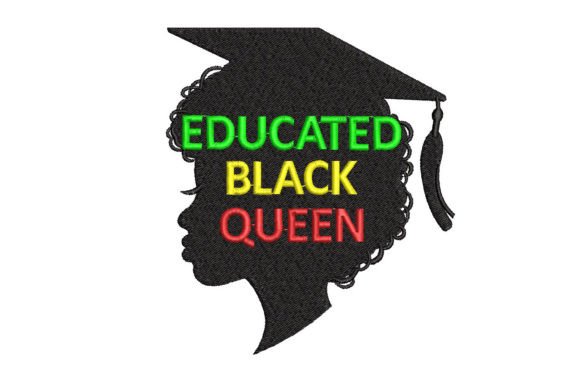
Graduated African Girl, Black Silhouette
A Bold, Celebratory Statement — Not Just Another School-Themed Design
As an embroidery designer who’s prepped over 200 craft fair booths—and shipped thousands of embroidered tote bags, tea towels, and patches—I’ll say it plainly: Graduated African Girl, Black Silhouette stands out the moment it hits your booth table. It’s not cute. It’s not rustic. It’s bold, modern, and deeply human—clean lines, confident posture, unmistakable cultural resonance. That black silhouette carries weight, dignity, and quiet joy. It reads instantly as celebration—not just academic achievement, but identity, pride, and belonging. For handmade market sellers, that emotional clarity is gold.
Where This Embroidery Design Truly Shines
In real-world craft fair testing, Graduated African Girl, Black Silhouette performs strongest on products where scale, contrast, and storytelling align:
- Tote bag design: Centered on a natural canvas or oatmeal linen tote, it becomes a walking conversation starter—visible from six feet away, legible at arm’s length, and photograph-ready for Instagram reels.
- Apron embroidery: Placed just above the pocket or centered on the chest panel, it adds intentionality to kitchen and studio wear—especially for educators, makers, and small-batch bakers who value representation.
- Embroidered patch: When stitched onto denim jackets, backpacks, or graduation caps, it transforms into wearable affirmation. Patches also scale beautifully for batch production and ship flat—ideal for Etsy sellers managing inventory.
- Tea towel embroidery: Works best on medium-weight cotton or linen-look towels (not terry). The clean silhouette avoids visual clutter against striped or subtle textured backgrounds—unlike floral or script-based designs that fight for attention.
- Pillow cover & small pouch: At 3–4 inches wide, the design retains impact without distortion. Its balanced proportions prevent awkward stretching on curved seams or corners.
What Holds It Back—And How to Work Around It
This isn’t a “set-and-forget” machine embroidery design. Its strength lies in intentionality—not automation. Here’s what I watch for:
- Stitch density matters: Silhouettes can hide dense fill areas. Always test on scrap fabric *with your intended stabilizer*—especially for dark fabrics or textured tea towels. Too much density = puckering; too little = translucent gaps.
- No tiny lettering or fine linework: Thankfully, Graduated African Girl, Black Silhouette avoids fragile details. That means fewer thread breaks during long runs and higher consistency across 50+ tote bags.
- Cap embroidery? Proceed with caution: Curved surfaces compress stitch placement. Run a test on a blank cap using your smallest recommended hoop size—and verify the shoulders and head shape remain proportionate after hooping.
- Dark fabric demands contrast: On navy, charcoal, or deep burgundy, use bright white or metallic silver thread—not ecru or gray. Your thread colors make or break visibility.
Why It Converts at Craft Fairs—and on Etsy
At live markets, customers pause longer for designs that reflect their values—not just aesthetics. Graduated African Girl, Black Silhouette does three things well: it signals inclusivity without slogans, honors milestones without cliché, and fits seamlessly into both contemporary and timeless handmade product lines. Booth visitors don’t ask, “What does this mean?” They nod, smile, and reach for the tote bag. Online, it photographs cleanly—no busy background needed. A single printable mockup (on a cream linen pillow + soft shadow) outperforms ten generic floral listings. For Etsy sellers, that translates to higher click-through rates, lower bounce, and stronger perceived value—even before pricing.
Production Notes Every Embroidery Designer Should Confirm
Before cutting your first fabric piece, do these six things:
- Test the machine embroidery design on scrap fabric *matching your final product’s weight and texture*—especially if using thick canvas, terry cloth, or structured twill.
- Check thread contrast on *both light and dark fabric swatches*. Don’t assume black-on-white reads the same as white-on-navy.
- Review spacing between elements—does the graduation cap sit cleanly above the shoulders? Does negative space breathe, or feel cramped?
- Confirm hoop size compatibility. If your embroidery file requires a 5x7" hoop but you only run 4x4", you’ll need to resize—or skip high-volume items like patches.
- Inspect stitch density visually in editing software. Look for overlapping fills or nested satin stitches that could cause bulk or stiffness on lightweight aprons or pouches.
- Use cutaway stabilizer for woven fabrics and tear-away for knits. Skip fusible web—it shifts under stitching and blurs clean edges.
One Real Mockup Beats Ten Digital Previews
I always make at least one finished product before listing: a 100% cotton tea towel, hemmed and pressed, with Graduated African Girl, Black Silhouette centered 3 inches below the top edge. Why? Because digital embroidery files lie. Screens flatten dimension, hide thread sheen, and mask how light catches raised satin stitches. That physical sample tells you everything—how it folds, how it hangs, how it feels in hand. It becomes your booth hero piece, your Etsy banner image, and your confidence anchor when a customer asks, “Is this really handmade?”
Final Thought: This Is More Than a School-Themed Embroidery File
Yes, it lives in the School category—and yes, it’s a clean embroidery asset. But its real power is in resonance. It elevates a simple tote bag into a meaningful gift. It turns a plain apron into a statement of support. It gives boutique makers a way to honor achievement without leaning on tired tropes. For creative entrepreneurs building authentic brands, Graduated African Girl, Black Silhouette isn’t just another design asset—it’s a quietly powerful tool for connection, visibility, and craft fair momentum. Just remember: test, contrast, stabilize, and show up with intention. Then watch it sell.