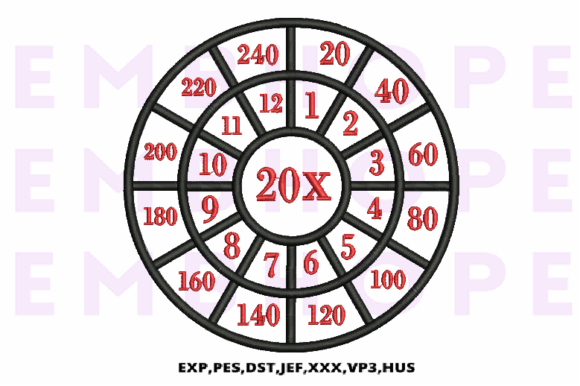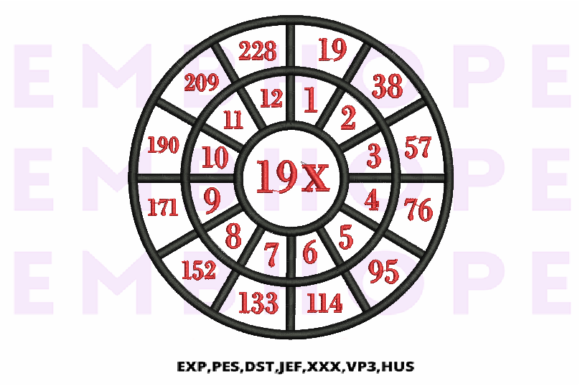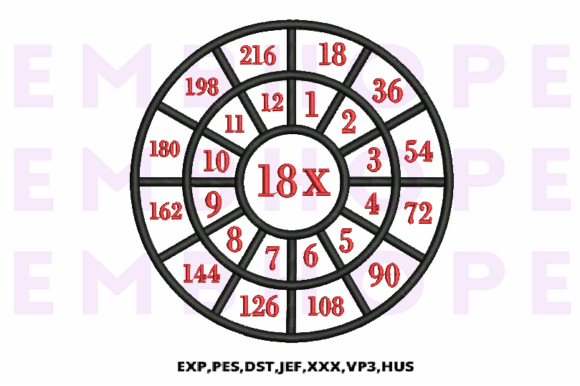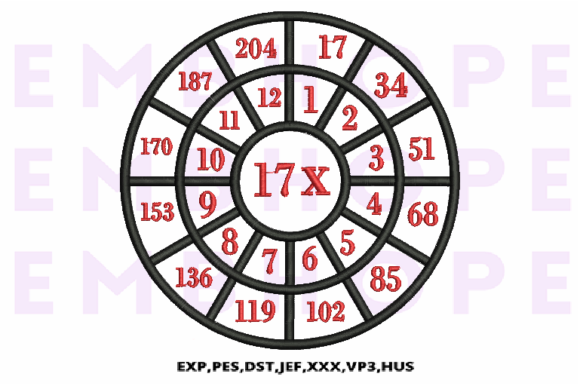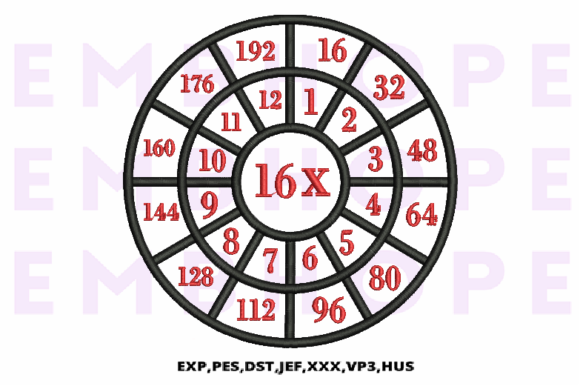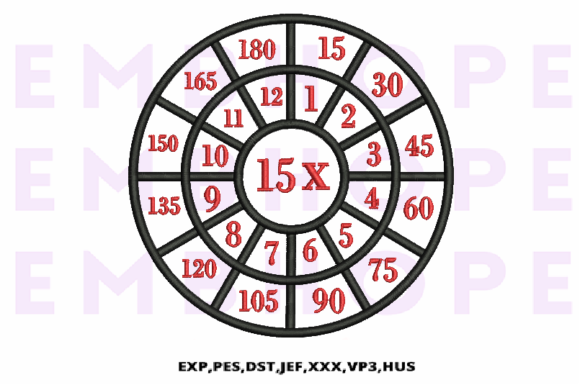
Multiplication Math Wheels 15 X
First Impressions: Bright, Playful, and Purposefully Clear
When I opened Multiplication Math Wheels 15 X for the first time, what struck me wasn’t just the cheerful color palette—it was how instantly legible the layout felt. As a designer who’s stitched hundreds of educational embroidery files for classrooms and custom kids’ apparel, I appreciate when a math-themed design avoids visual clutter while still feeling joyful. These wheels use clean circular framing, well-spaced numerals, and consistent font weight—no tiny serifs or overlapping lines that vanish under thread. It reads like a classroom poster translated thoughtfully into stitchable form, not a scanned worksheet forced into embroidery.
A Real-World Test: Stitching It on a Cotton Canvas Tote for a Local Teacher
Last week, I prepped a set of Multiplication Math Wheels 15 X for a custom embroidered tote bag—part of a small batch for a third-grade teacher’s “Math Motivation” giveaway. I chose midweight cotton canvas, medium tear-away stabilizer, and standard 40-weight poly thread. The design stitched cleanly at its native size, with crisp satin-stitched numerals and smooth fill-stitched wheel backgrounds. No puckering, no skipped stitches—even around the inner concentric rings where stitch density tends to climb. Kids notice details like that. So do parents scrolling Etsy listings. That clarity builds trust in your handmade product before they even hold it.
Where It Shines (and Where It Needs Extra Care)
Multiplication Math Wheels 15 X works beautifully on:
- Tote bags and tea towels—the circular symmetry anchors the composition without competing with seams or pockets;
- Sweatshirts and crewneck tees—its balanced proportions scale well on chest or sleeve placements;
- Embroidered patches—clean outer edges and moderate detail make it ideal for iron-on or sew-on applications;
- Nursery decor and baby onesies—bright but not overwhelming, educational without feeling clinical;
- Holiday or end-of-year gifts—pair it with a mini chalkboard or pencil pouch for a cohesive, teacher-appreciation bundle.
But tread thoughtfully on:
- Thin or stretchy fabrics—like jersey or lightweight rayon—where stabilizer choice becomes critical to prevent distortion;
- Dark fabric backgrounds—test light thread colors first; some bright yellows or pastels may lack contrast without a white underlay;
- Caps and curved surfaces—the full wheel shape doesn’t adapt as easily as linear text or icons, so consider using one isolated wheel instead of the full set;
- Small hoop sizes (under 4”)—if you’re planning to split or resize, verify that inner numerals remain legible after scaling down.
Design Integrity Meets Commercial Practicality
As an Etsy seller and craft fair vendor, I’ve learned that buyers don’t just buy a machine embroidery design—they buy confidence in the finished product. Multiplication Math Wheels 15 X supports that confidence. Its layout leaves breathing room between elements, meaning less risk of thread build-up in tight corners. There’s no excessive running stitch travel—just purposeful movement between sections. That translates to quieter machines, faster runs, and fewer restarts during production. For a small shop owner stitching 10–20 pieces per order, those seconds add up to real time savings.
It also elevates perceived value. A personalized sweatshirt with this design feels intentional—not decorative filler. Parents recognize the educational intent; teachers see classroom-ready utility. That dual resonance makes it easier to price thoughtfully and position as more than “just another embroidery file.”
Designer Notes You’ll Actually Use
Before stitching Multiplication Math Wheels 15 X in your next project, do these five things:
- Test on scrap fabric that matches your final substrate—especially if using textured weaves or blends;
- Check thread color contrast on both light and dark mockups; avoid relying solely on screen previews;
- Review stitch density visually—look for any unusually dense fills that might cause stiffness on baby items or lightweight apparel;
- Confirm hoop size compatibility—if your machine has a max 5×7 hoop, ensure the largest wheel fits comfortably with margin;
- Verify licensing terms—since this is marketed for classroom and school use, double-check whether commercial resale of finished embroidered goods is permitted.
Final Thought: A Design That Serves Both Child and Creator
Multiplication Math Wheels 15 X isn’t flashy—but it doesn’t need to be. Its strength lies in quiet functionality: clear numerals, balanced rhythm, and a mood that invites engagement rather than intimidation. Whether you’re stitching a single personalized gift or producing a boutique line of math-themed kitchen towels, this embroidery file supports intention over impulse. It reminds us that great educational design in embroidery isn’t about cramming in more—it’s about making what’s essential feel welcoming, durable, and genuinely useful. And for crafters building real businesses around thoughtful handmade products, that kind of reliability is worth more than any extra flourish.