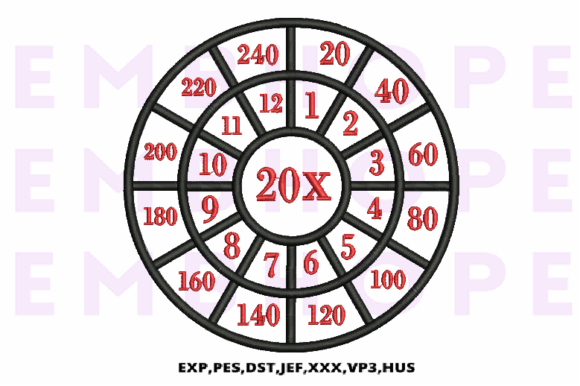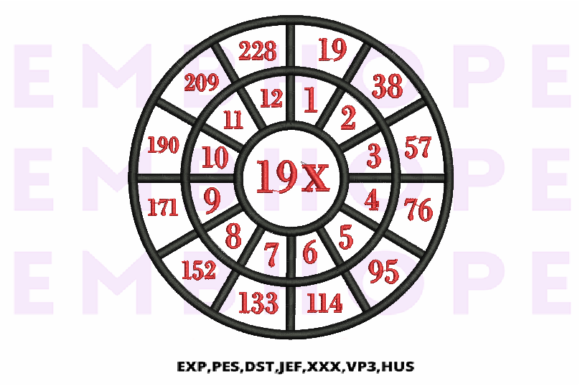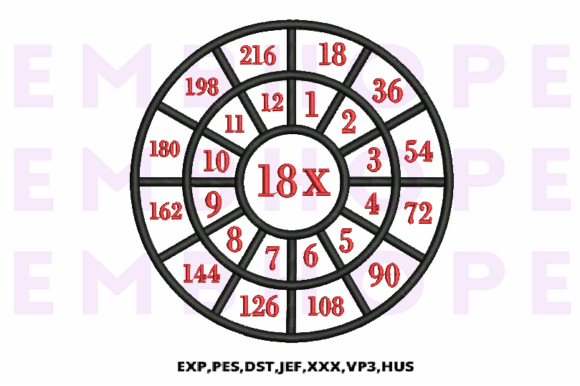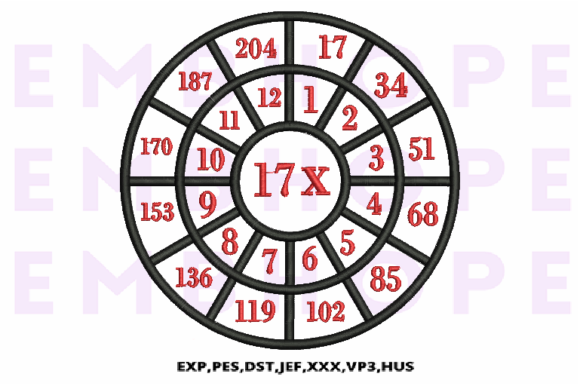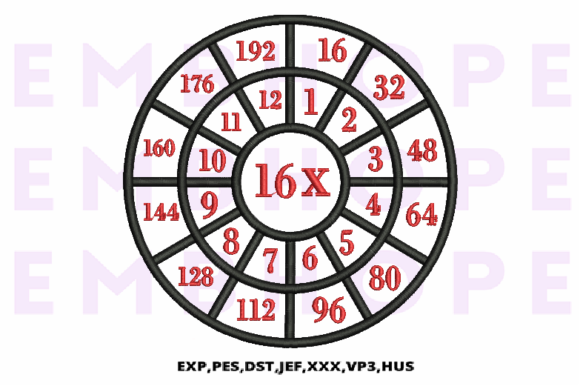
Multiplication Math Wheels 16 X
First Impressions: Bright, Playful, and Surprisingly Heartfelt
As an embroidery designer who’s stitched everything from heirloom christening gowns to boutique aprons for wedding registries, I opened Multiplication Math Wheels 16 X expecting a classroom tool—and found something far more versatile. The design radiates cheerful energy: bold circular layouts, clean numerals, and generous spacing between elements make it feel both educational and handmade. It’s not fussy or overly technical—it’s sweet, modern, and quietly nostalgic, like a favorite childhood workbook reimagined in thread. There’s warmth in the rhythm of the wheels, and that emotional resonance is exactly what transforms a simple machine embroidery design into a meaningful personalized gift.
Where This Design Truly Shines
Multiplication Math Wheels 16 X works beautifully beyond its School roots—especially when you shift context. Picture it on a soft cotton baby blanket: the symmetry feels like a gentle lullaby in stitch form, subtly celebrating growth and learning before the child even holds a pencil. On a linen kitchen towel? It adds wit and warmth—ideal for teachers, homeschooling parents, or math-loving newlyweds who met in calculus class. A pillow cover embroidered with one centered wheel becomes a quiet nod to lifelong curiosity; a custom tote bag featuring three interlocking wheels makes a standout craft fair product for educators or STEM-themed baby showers.
For Etsy sellers and small shop owners, this design bridges niches effortlessly. It appeals to buyers seeking wedding gifts with personality (think “our first home, our first times table”), baby embroidery with substance (not just teddy bears), and personalized gifts that reflect identity—not just initials. Because it’s inherently visual and balanced, it photographs exceptionally well: no busy background needed, no styling overkill. Just natural light, a clean surface, and the design doing the talking.
Smart Pairings for Real-World Products
- Baby blankets & nursery decor: Use a single wheel centered on a minky or organic cotton blanket—soft colors keep it soothing, while the structure reassures parents it’s intentional, not random.
- Embroidered towels & aprons: Works best on medium-weight terry or woven cotton. Avoid placing near hems or seams where tension distorts circles.
- Pillow covers & tote bags: Ideal for front-and-center placement. The radial layout draws the eye naturally and scales well across fabric widths.
- Custom order previews: Include a printable mockup showing Multiplication Math Wheels 16 X on multiple products—this builds trust by showing how thoughtful your personalization process really is.
Where to Proceed With Care
This design’s charm lies in clarity—but that also means certain applications need extra attention. Avoid using it on stretchy baby onesies unless you’re confident in your stabilizer strategy; the circular geometry can warp under tension. On thick, textured fabric like heavy terry or bouclé, test stitch density first—the inner numerals may blur if stitches are too dense or too sparse. Dark fabrics demand high-contrast thread colors; pale yellow or mint won’t read clearly without careful testing.
Small lettering and fine lines aren’t the focus here, but the numerals inside each wheel *are* legible at standard sizes—if you plan to shrink the entire design below 3 inches, verify readability on scrap fabric. Curved surfaces (like rounded mug cozies or contoured pillow inserts) will require rehooping or specialty hoops; don’t assume the file auto-adjusts. And remember: frequent washing weakens delicate satin-stitched edges over time, so recommend gentle cycles for finished products like embroidered towels or baby items.
Why Customers Connect—and Keep Coming Back
What makes Multiplication Math Wheels 16 X more than just another digital embroidery file? It invites storytelling. A grandparent buying a blanket might say, “This is for when she asks *why*—and I get to help her find the answer.” A teacher ordering custom aprons isn’t just branding her classroom—she’s signaling pride in her craft. That emotional layer elevates perceived value instantly. Buyers don’t just see thread and fabric; they see intention, care, and quiet intelligence.
That perception directly supports customer trust—especially for handmade product sellers who rely on authenticity. When your Etsy listing shows real stitched samples (not just vector renders), and your product photography highlights the tactile quality of the wheels’ curves and clean fills, you signal craftsmanship—not just convenience. Engagement rises because people want to share *why* they chose it: “My daughter’s first multiplication test was today,” or “We teach math through baking—this apron starts the lesson.”
Practical Embroidery Notes You’ll Want to Follow
Before stitching your first customer order, do these five things:
- Test on scrap fabric that matches your intended product—same weight, weave, and color.
- Check thread color contrast on both light and dark fabric mockups. What reads clearly on white may vanish on navy.
- Confirm hoop size compatibility. If your machine uses smaller hoops, verify whether the design splits cleanly—or if centering requires manual rehooping.
- Review stitch density—especially around numeral interiors. Too dense = puckering; too loose = gaps. Adjust if needed for your fabric texture.
- Use appropriate stabilizer. Tear-away works for stable wovens; cut-away is safer for knits or high-wear items like towels.
And one non-negotiable: confirm commercial licensing terms before selling finished products. As a professional embroiderer, I never assume—especially with designs labeled for classroom use. A quick email to the creator or license review prevents future headaches.
A Design That Grows With Its Purpose
Multiplication Math Wheels 16 X isn’t just about memorizing facts. It’s about marking milestones, honoring curiosity, and wrapping practicality in joy. Whether you’re stitching for a baby’s first year, a teacher’s retirement, or a couple’s “equation for forever,” this embroidery file carries quiet weight. It reminds us that learning—and loving—is often most powerful when it’s circular, repeatable, and full of heart.