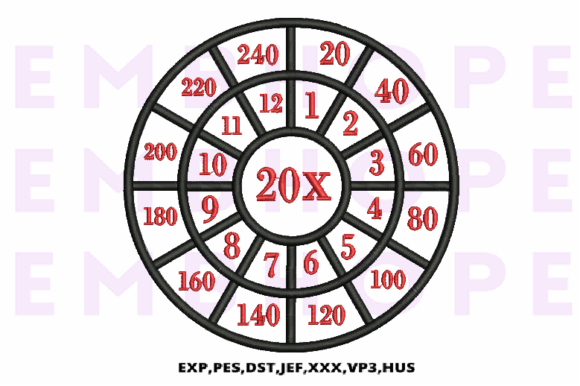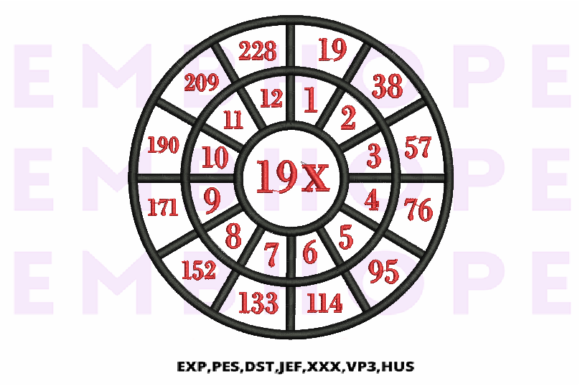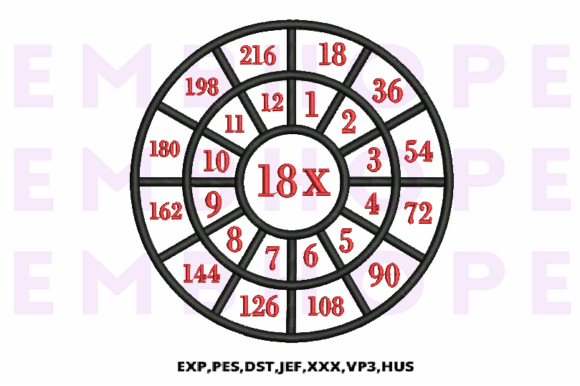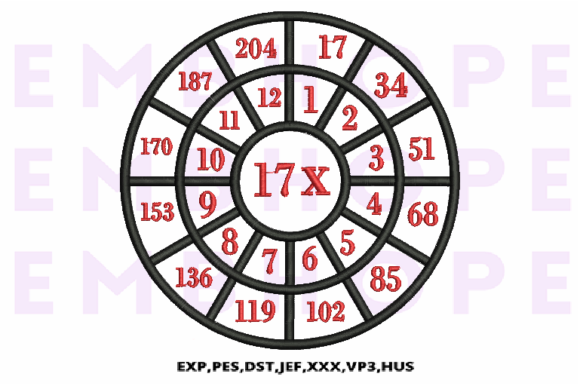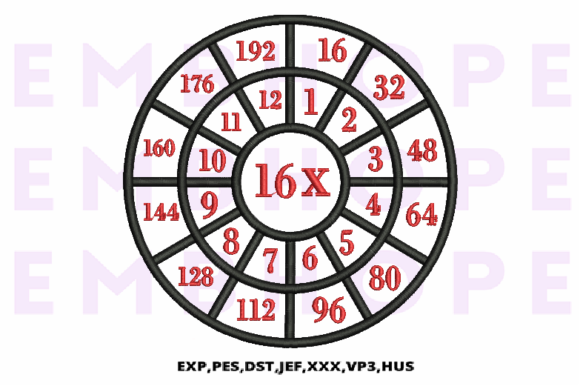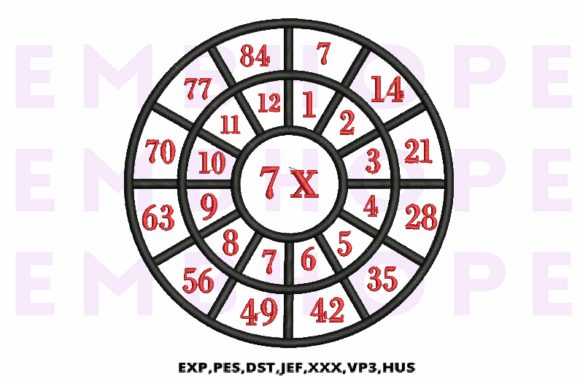
Multiplication Math Wheels 7 X
A Bright, Playful Anchor for Learning-Focused Embroidery Projects
As a designer who’s stitched everything from nursery wall hangings to boutique math-themed tote bags, my first impression of Multiplication Math Wheels 7 X is immediate and warm: it feels like a cheerful classroom helper translated into thread. The circular wheel layout—centered with “7 ×” and radiating outward in clean, legible segments—carries an inherent sense of order and rhythm. It’s not just decorative; it’s functional by design. The lines are bold but not heavy, the numerals are generously spaced, and the overall composition breathes well within standard hoop boundaries. That balance makes it unusually versatile—not too cutesy for older kids, not too clinical for preschoolers.
Where This Design Truly Shines in Real Projects
I recently used Multiplication Math Wheels 7 X on a set of organic cotton tea towels for a local teacher’s gift shop—and it landed exactly as intended. Stitched in navy and sunshine yellow thread on off-white linen-blend fabric, the design popped with clarity and warmth. It read instantly at arm’s length, held up beautifully after three rounds of gentle machine washing, and sparked genuine smiles from customers who recognized its purpose. That’s the sweet spot: Multiplication Math Wheels 7 X excels on medium-weight, stable fabrics where legibility and joyful intent matter most—think embroidered sweatshirt cuffs, patch-appliquéd on denim backpacks, or centered on pillow covers for a learning-themed nursery.
For Etsy sellers and small shop owners, this design quietly elevates perceived value. A plain cotton tote becomes a thoughtful, conversation-starting gift when anchored with Multiplication Math Wheels 7 X. It reads as handmade *and* intentional—not generic clip art stitched on. I’ve seen buyers linger longer on listings that pair this design with clean, minimal mockups (especially black-and-white or soft pastel backgrounds), because the visual clarity translates directly to trust. When your embroidery file supports both personal use and commercial projects—and communicates educational warmth without clutter—it strengthens brand consistency across your craft business.
What to Watch For: Practical Embroidery Realities
Like any well-intended design, Multiplication Math Wheels 7 X has natural boundaries. On stretchy knit t-shirts? Proceed with caution. Without proper cutaway stabilizer and careful hooping, the outer numerals can distort slightly—especially the “7 ×” center if the fabric shifts mid-stitch. I recommend testing on scrap jersey first and slowing your machine speed by 15–20% for best results.
Small hoop sizes (under 4” diameter) will require careful placement—some versions may crop the outermost multiplication facts unless scaled down thoughtfully. And while the design avoids ultra-fine details, the inner circle text does rely on crisp satin stitch definition. On heavily textured fabrics—like bouclé blankets or thick terrycloth towels—those fine segments can blur. In those cases, consider using Multiplication Math Wheels 7 X as part of a larger applique design, where contrasting fabric adds dimension and reinforces legibility.
Dark fabric demands extra attention to thread contrast. The original description mentions “bright and cheery,” which implies high-visibility colors—but don’t assume all included thread palettes suit charcoal or navy. Always preview your chosen thread colors against your base fabric in natural light. A quick black-and-white printable mockup helps spot low-contrast areas before stitching begins.
Design Notes Every Embroiderer Should Check Before Stitching
- Test on scrap fabric first—especially if using textured, stretchy, or dark materials.
- Review stitch density: Moderate fill and satin stitch coverage means it’s unlikely to overwhelm lightweight fabrics, but confirm density matches your fabric weight.
- Confirm hoop size compatibility: Measure the widest point of the design file—if it’s labeled for 5×7 hoops, avoid forcing it into a 4×4 without scaling verification.
- Inspect small details: Zoom in on the “×” symbol and smallest numerals—do they retain shape at your intended size? If edges look pixelated or overly thin, adjust scaling or request a higher-res version.
- Use appropriate stabilizer: Tear-away works well on stable wovens; cutaway is safer for knits or frequent-wash items like baby embroidery or kitchen towels.
- Verify licensing: Since this falls under School and Embroidery categories, double-check whether the digital embroidery file permits commercial use for finished products (e.g., selling embroidered sweatshirts) or resale of the file itself.
Why This Fits Seamlessly Into Your Creative Workflow
Multiplication Math Wheels 7 X isn’t flashy—but it’s reliable. It doesn’t compete with your craftsmanship; it complements it. Whether you’re prepping holiday embroidery for a homeschool co-op, building a themed collection for your Etsy shop, or designing custom apparel for a STEM camp, this design delivers consistent recognition and quiet professionalism. Customers don’t need to decode it—they get it immediately, and that builds engagement before the first stitch is even sewn.
It also plays well with others. Pair it with simple border motifs (like tiny stars or pencils) for a cohesive tote bag design, or layer it subtly behind a child’s name in a monogram-style nursery pillow cover. As a standalone embroidered patch, it holds up beautifully—clean edges, balanced weight, no excessive bulk. That versatility makes it a smart addition to your library of design assets, especially if you serve educators, parents, or small-batch makers who value meaning alongside aesthetics.
In short: Multiplication Math Wheels 7 X earns its place not through novelty, but through thoughtful execution. It’s the kind of embroidery file that makes your finished product feel both purposeful and personal—exactly what handmade appeal is built on.